Artificial Intelligence: America’s New Frontier
As AI technology weaves its way into daily life, its influence on sectors from healthcare to law enforcement is becoming increasingly evident.
In recent months, the transformation driven by artificial intelligence (AI) across various sectors in the United States has sparked both curiosity and skepticism.
Historically, discussions around AI's economic impact have been heavily dominated by tech giants, who potentially have vested interests in amplifying the narrative.
However, recent developments in AI applications are challenging these paradigms and revealing significant shifts in diverse professions.
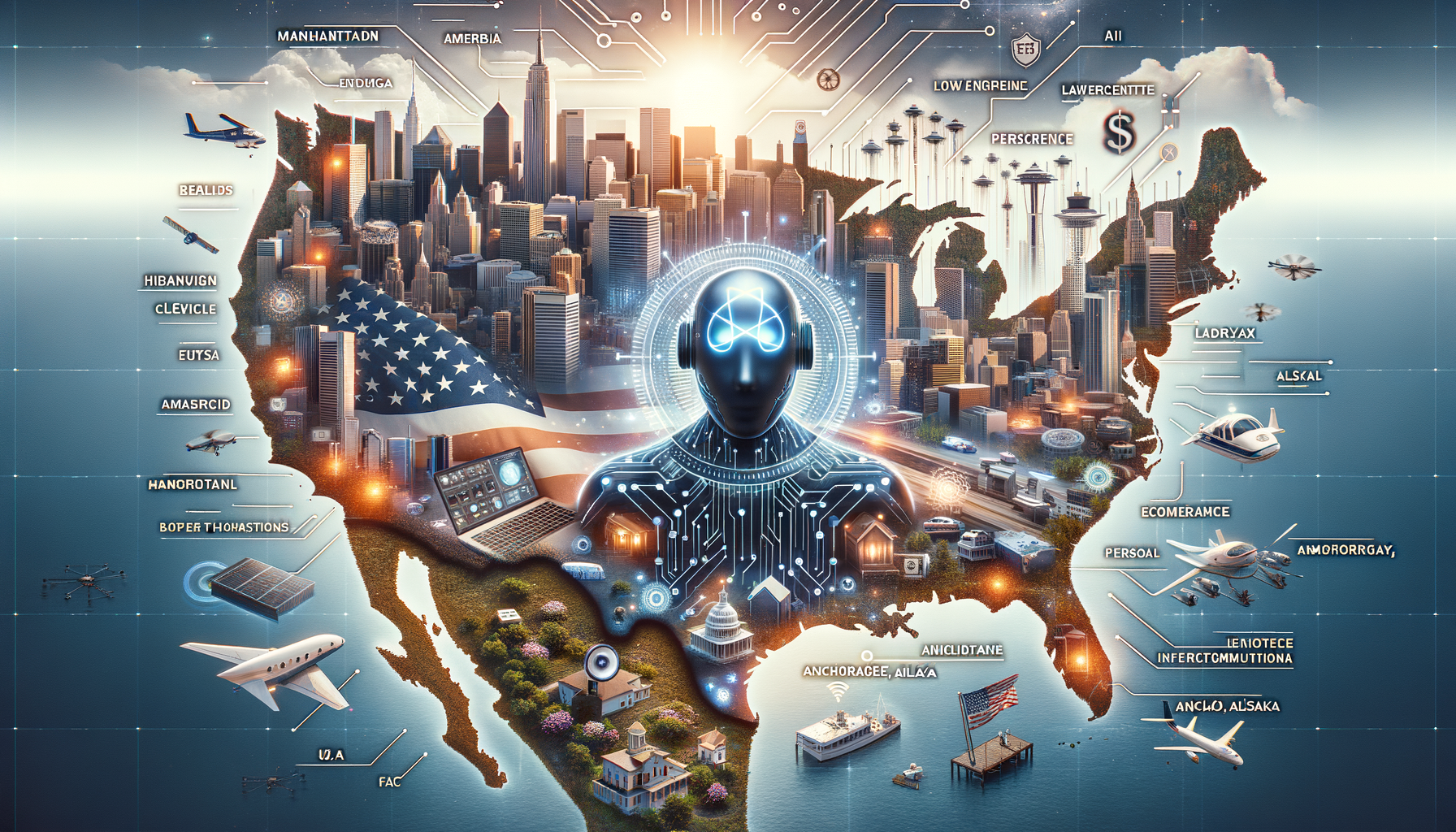
In Manhattan, a groundbreaking integration of AI into psychiatric evaluations has emerged.
Physicians are now employing AI tools that analyze the language used by patients during therapy sessions, offering deeper insights into their psychological states.
This advancement marks a departure from traditional methods reliant on a doctor's memory and observational skills.
As one psychiatrist remarked, such technology is poised to create a 'radical shift' in the precision and effectiveness of mental health diagnoses and treatments.
Meanwhile, in Lafayette, Indiana, the local police have embraced an AI-driven system dubbed 'Draft One.' Developed by Axon, this solution harnesses AI to convert police body camera footage into written reports with the push of a button, potentially reducing report-writing time by an estimated 40%.
Despite past criticisms of law enforcement technologies, particularly around algorithmic bias, investors remain optimistic, evidenced by Axon's stock soaring 730% over the past five years.
Beyond departmental and professional contexts, AI is also permeating personal projects.
In Anchorage, Alaska, an unlikely collaboration between a massage therapist and AI resulted in a book proposal that matched the calibre expected by esteemed publishing houses.
Despite lacking formal education, the therapist's venture with AI showcases how accessible technology can empower individuals to transcend conventional expectations.
These instances represent a mere fraction of the countless AI success stories unfolding globally.
Concomitantly, the American economy is witnessing a rise in productivity following the stagnation induced by the COVID-19 pandemic.
Experts partly attribute this resurgence to shifts in labor markets, where local skilled labor is filling roles left by the exodus of cheaper foreign workers.
Moreover, this uptick is seen as part of a broader recovery cycle.
Yet, the consensus highlights the crucial role of AI technology in propelling productivity forward.
A recent report by Apollo underscores the growing wave of corporate and research investment in AI in the U.S.—a phenomenon not mirrored in China, historically a leader in technology adoption.
As this transformative wave accelerates, concerns about market bubbles and tech stocks gain traction.
Nonetheless, it is difficult to envision Europe or other regions surpassing America's current technological momentum, reminiscent of the U.S.'s tech boom that outpaced Europe in the 1990s.
The evolution presents three pivotal lessons.
Firstly, large-scale technological transformations tend to create disparate economic landscapes.
Post the 1990-91 recession, the U.S. experienced 'jobless recovery' marked by rising stock prices but stagnant job growth—echoes of which might be visible today.
Despite low unemployment in the U.S., layoffs remain prevalent in AI-impacted sectors like software development and middle management.
Adapting labor markets and societies to such technological leaps is neither swift nor seamless.
While economists predict new job creation aligning with technological advancements, historical and sociological perspectives indicate substantial adversity faced by those bearing the brunt of these shifts.
Such changes often trigger profound political and social disruptions.
The manufacturing industry's decline triggered political upheavals like President Trump's rise and the populist surge in Europe, despite it constituting merely 10% of the workforce.
In contrast, AI impacts a potential 85% of the workforce, projecting a far-reaching disruption in employment landscapes.
Nobel Laureate Professor Daron Acemoglu of MIT warns that the economic benefits of AI might disproportionately favour capital owners over workers.
This scenario reiterates disparities reminiscent of previous technological eras.
Finally, societal anxiety surrounding the future of work now transcends individual sectors, encompassing diverse economic and social strata.
As AI optimists project comprehensive impacts, it becomes increasingly challenging to isolate roles immune to AI influence, underscoring profound collective uncertainties.
Historically, discussions around AI's economic impact have been heavily dominated by tech giants, who potentially have vested interests in amplifying the narrative.
However, recent developments in AI applications are challenging these paradigms and revealing significant shifts in diverse professions.
In Manhattan, a groundbreaking integration of AI into psychiatric evaluations has emerged.
Physicians are now employing AI tools that analyze the language used by patients during therapy sessions, offering deeper insights into their psychological states.
This advancement marks a departure from traditional methods reliant on a doctor's memory and observational skills.
As one psychiatrist remarked, such technology is poised to create a 'radical shift' in the precision and effectiveness of mental health diagnoses and treatments.
Meanwhile, in Lafayette, Indiana, the local police have embraced an AI-driven system dubbed 'Draft One.' Developed by Axon, this solution harnesses AI to convert police body camera footage into written reports with the push of a button, potentially reducing report-writing time by an estimated 40%.
Despite past criticisms of law enforcement technologies, particularly around algorithmic bias, investors remain optimistic, evidenced by Axon's stock soaring 730% over the past five years.
Beyond departmental and professional contexts, AI is also permeating personal projects.
In Anchorage, Alaska, an unlikely collaboration between a massage therapist and AI resulted in a book proposal that matched the calibre expected by esteemed publishing houses.
Despite lacking formal education, the therapist's venture with AI showcases how accessible technology can empower individuals to transcend conventional expectations.
These instances represent a mere fraction of the countless AI success stories unfolding globally.
Concomitantly, the American economy is witnessing a rise in productivity following the stagnation induced by the COVID-19 pandemic.
Experts partly attribute this resurgence to shifts in labor markets, where local skilled labor is filling roles left by the exodus of cheaper foreign workers.
Moreover, this uptick is seen as part of a broader recovery cycle.
Yet, the consensus highlights the crucial role of AI technology in propelling productivity forward.
A recent report by Apollo underscores the growing wave of corporate and research investment in AI in the U.S.—a phenomenon not mirrored in China, historically a leader in technology adoption.
As this transformative wave accelerates, concerns about market bubbles and tech stocks gain traction.
Nonetheless, it is difficult to envision Europe or other regions surpassing America's current technological momentum, reminiscent of the U.S.'s tech boom that outpaced Europe in the 1990s.
The evolution presents three pivotal lessons.
Firstly, large-scale technological transformations tend to create disparate economic landscapes.
Post the 1990-91 recession, the U.S. experienced 'jobless recovery' marked by rising stock prices but stagnant job growth—echoes of which might be visible today.
Despite low unemployment in the U.S., layoffs remain prevalent in AI-impacted sectors like software development and middle management.
Adapting labor markets and societies to such technological leaps is neither swift nor seamless.
While economists predict new job creation aligning with technological advancements, historical and sociological perspectives indicate substantial adversity faced by those bearing the brunt of these shifts.
Such changes often trigger profound political and social disruptions.
The manufacturing industry's decline triggered political upheavals like President Trump's rise and the populist surge in Europe, despite it constituting merely 10% of the workforce.
In contrast, AI impacts a potential 85% of the workforce, projecting a far-reaching disruption in employment landscapes.
Nobel Laureate Professor Daron Acemoglu of MIT warns that the economic benefits of AI might disproportionately favour capital owners over workers.
This scenario reiterates disparities reminiscent of previous technological eras.
Finally, societal anxiety surrounding the future of work now transcends individual sectors, encompassing diverse economic and social strata.
As AI optimists project comprehensive impacts, it becomes increasingly challenging to isolate roles immune to AI influence, underscoring profound collective uncertainties.