Strategic Restraint, Credible Force, and the Discipline of Power
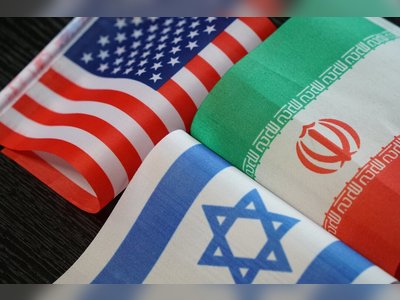
President Donald Trump entered the crisis with a clear preference familiar to military planners: if force were to be used, it should be short, overwhelming, and decisive. The objective was not a prolonged war, nor nation-building, but coercive clarity—an action sharp enough to alter strategic behavior without dragging the region into open-ended conflict.
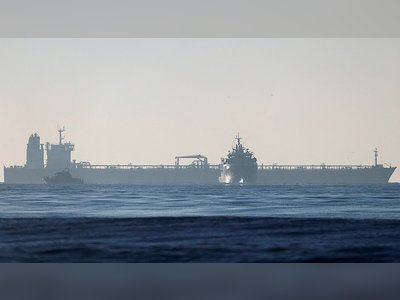
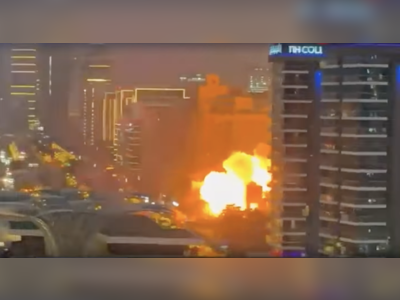
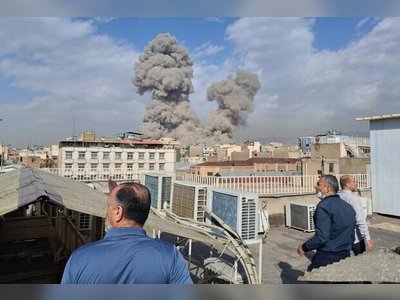
Yet Iran is not a system that collapses neatly under pressure. That reality shaped the final decision. Even a successful, limited strike carried a high probability of cascading retaliation. American bases across the Middle East, Israel, Gulf energy infrastructure, and critical shipping lanes would have been exposed. Oil prices, denominated in U.S. dollars, could have spiked sharply, with immediate consequences for global markets and American consumers. Most importantly, the Iranian people—already suffering from inflation, unemployment, and currency erosion—would have borne the cost first.
This is where Trump’s approach deserves serious analytical credit. His objective was never collective punishment of civilians. It was to constrain a hostile regime while avoiding mass civilian harm and regional collapse. That balance—pressure without automatic violence—is difficult to execute and rarer still to sustain under public scrutiny.
The internal situation in Iran complicated the picture further. The protests were real, widespread, and driven by deep economic and political despair. The regime’s response was equally real and brutal. Live ammunition, mass arrests, and intimidation were deployed at scale. Fear was weaponized, and it worked. The streets emptied—not because grievances disappeared, but because repression preceded any external military action.
That sequence mattered. The crackdown occurred before any U.S. strike. When the protests subsided, Trump could credibly argue that pressure had altered behavior without a single missile launched. Strategically, this created an invaluable off-ramp: a way to de-escalate without humiliation for Tehran and without war for the region.
Critics often misread this as inconsistency. In reality, it was adaptive leadership under rapidly changing conditions. Strategy is not stubbornness; it is adjustment based on outcomes.
Crucially, the idea that regime change was immediately achievable did not withstand scrutiny. The protesters demonstrated extraordinary courage, but there was no unified leadership, no agreed political roadmap, and no figure capable of consolidating national momentum. Symbolic figures promoted abroad lacked domestic consensus. Sympathy did not translate into nationwide legitimacy.
From a military standpoint, the absence of large-scale defections was decisive. Without meaningful fractures inside the Revolutionary Guard or internal security services, a rapid collapse scenario was unrealistic. Initiating kinetic action in the hope that chaos would somehow self-organize into democracy would have been reckless.
Regional dynamics reinforced caution. Israel, Gulf states, and global energy markets were on edge—not because of American aggression, but because instability in Tehran increases the risk of miscalculation. Signs of weakened decision-making at the top of the Iranian system only heightened that danger, as hardliners could act independently under the logic that preemptive attack is the best defense.
Restraint, however, was not passivity. It was paired with clarity. Sanctions remained firmly in place. Secondary economic pressure intensified. Information and diplomatic signaling continued. Red lines were unmistakable. Capability was never in doubt.
This combination—pressure with restraint—is classic deterrence. Trump applied it with unusual transparency. The military option remains real, but it is conditional, not impulsive. That distinction matters profoundly, especially for ordinary Iranians struggling under an economy measured in shrinking U.S. dollar terms.
Some argue the United States should never involve itself in internal crises. Others argue it has a moral obligation to act. History shows that both extremes can produce disaster. What was avoided here was the most dangerous error of all: acting for moral theater without strategic clarity.
Instead, leverage was preserved, allies were reassured, civilians were spared the immediate costs of war, and diplomacy remained viable. For the Iranian people, this approach bought something rare in moments like this—time. Time without bombs. Time without invasion. Time without total collapse.
Sometimes restraint is not the absence of strength. Sometimes it is strength exercised at its highest level of discipline.