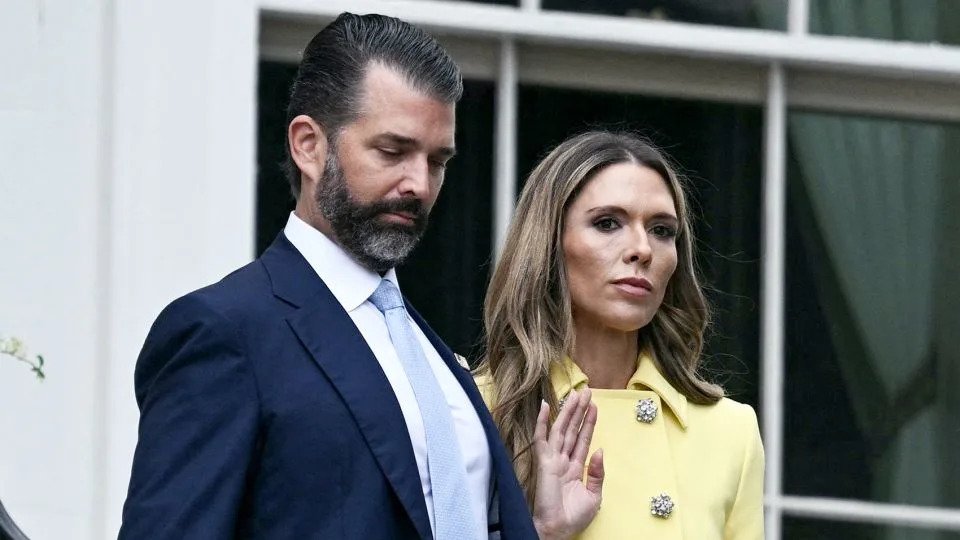
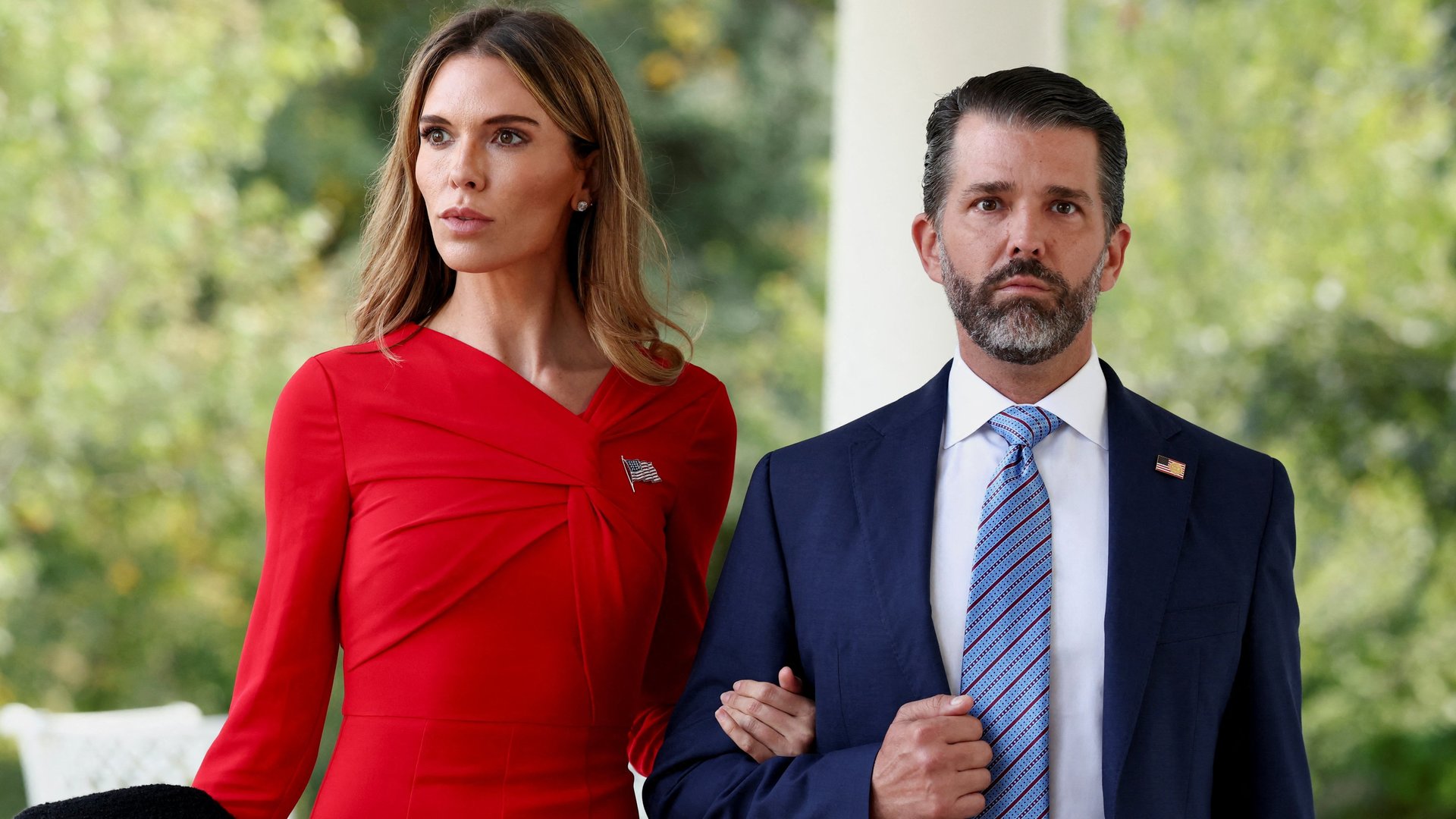
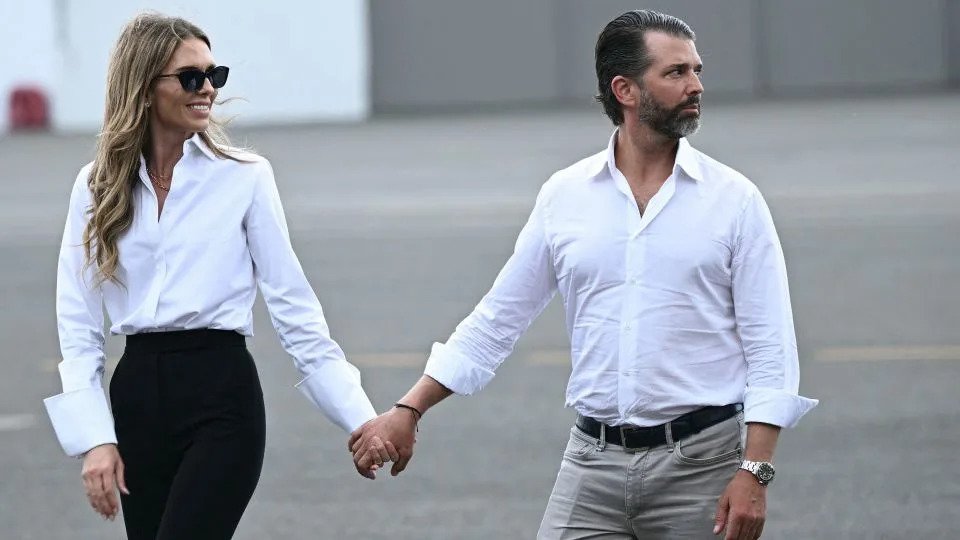
Bettina Anderson and Donald Trump Jr. Opt for Private Island Wedding After White House Idea Reportedly Discussed
The proposed symbolic Washington venue was ultimately set aside in favor of a private island ceremony, underscoring the couple’s shift toward a low-profile celebration amid intense public attention.
Relationship-driven political celebrity coverage has increasingly blurred the boundary between private life and institutional symbolism in Washington, as public figures connected to the Trump political orbit navigate heightened scrutiny over personal milestones.
What is confirmed is that Bettina Anderson and Donald Trump Jr. are planning a wedding ceremony on a private island location after earlier consideration of more publicly symbolic settings, including a discussion that referenced the White House as a possible venue concept.
The White House idea did not move forward and was never formalized as an official request or approved arrangement.
The initial concept of a White House-linked celebration circulated in social and media discussion because of Donald Trump Jr.’s proximity to the former and current president, Donald Trump, and the family’s longstanding association with the White House as a political institution.
However, there is no indication that any federal planning process, security coordination, or formal scheduling tied to such an event ever advanced.
The decision to move the ceremony to a private island reflects a return to conventional arrangements for high-profile political families seeking privacy.
Exclusive island venues are frequently chosen by public figures due to their controlled access, natural security barriers, and ability to limit media exposure without requiring federal involvement or public infrastructure planning.
Bettina Anderson, a socialite and public figure with ties to high-profile social and philanthropic circles, has maintained a relatively private profile in comparison to the political visibility of the Trump family.
Donald Trump Jr., the eldest son of President Donald Trump, has remained a prominent political and media figure, frequently engaged in campaign activity, public commentary and business ventures.
The contrast between the floated White House concept and the eventual island setting highlights a recurring dynamic in American political families: the symbolic weight of federal institutions versus the practical need to separate personal events from state spaces.
The White House, while often used for official ceremonies, is tightly regulated and rarely considered for private family celebrations without explicit presidential and administrative planning.
In previous administrations, private family events at or near the White House have been limited in scope and typically confined to official residences or formally sanctioned gatherings.
Any proposal involving personal weddings would require extensive coordination across security services, protocol offices and federal event planning units, making informal consideration unlikely to advance far without public confirmation.
The shift to a private island venue also reduces potential political friction.
Any perception of using the White House for a personal family wedding could raise questions about the separation between public office and private life, particularly in politically polarized environments where symbolic use of federal property is closely scrutinized.
The Trump family has long navigated intense public attention around personal relationships, business activities and political involvement.
That visibility often amplifies even informal discussions into broader narratives, particularly when they involve iconic institutions such as the White House.
For now, the planning focus has settled on a private island ceremony, which provides logistical control, privacy and separation from political symbolism.
The adjustment reflects a practical resolution to what began as a high-profile speculative idea rather than an institutional plan.
What is confirmed is that Bettina Anderson and Donald Trump Jr. are planning a wedding ceremony on a private island location after earlier consideration of more publicly symbolic settings, including a discussion that referenced the White House as a possible venue concept.
The White House idea did not move forward and was never formalized as an official request or approved arrangement.
The initial concept of a White House-linked celebration circulated in social and media discussion because of Donald Trump Jr.’s proximity to the former and current president, Donald Trump, and the family’s longstanding association with the White House as a political institution.
However, there is no indication that any federal planning process, security coordination, or formal scheduling tied to such an event ever advanced.
The decision to move the ceremony to a private island reflects a return to conventional arrangements for high-profile political families seeking privacy.
Exclusive island venues are frequently chosen by public figures due to their controlled access, natural security barriers, and ability to limit media exposure without requiring federal involvement or public infrastructure planning.
Bettina Anderson, a socialite and public figure with ties to high-profile social and philanthropic circles, has maintained a relatively private profile in comparison to the political visibility of the Trump family.
Donald Trump Jr., the eldest son of President Donald Trump, has remained a prominent political and media figure, frequently engaged in campaign activity, public commentary and business ventures.
The contrast between the floated White House concept and the eventual island setting highlights a recurring dynamic in American political families: the symbolic weight of federal institutions versus the practical need to separate personal events from state spaces.
The White House, while often used for official ceremonies, is tightly regulated and rarely considered for private family celebrations without explicit presidential and administrative planning.
In previous administrations, private family events at or near the White House have been limited in scope and typically confined to official residences or formally sanctioned gatherings.
Any proposal involving personal weddings would require extensive coordination across security services, protocol offices and federal event planning units, making informal consideration unlikely to advance far without public confirmation.
The shift to a private island venue also reduces potential political friction.
Any perception of using the White House for a personal family wedding could raise questions about the separation between public office and private life, particularly in politically polarized environments where symbolic use of federal property is closely scrutinized.
The Trump family has long navigated intense public attention around personal relationships, business activities and political involvement.
That visibility often amplifies even informal discussions into broader narratives, particularly when they involve iconic institutions such as the White House.
For now, the planning focus has settled on a private island ceremony, which provides logistical control, privacy and separation from political symbolism.
The adjustment reflects a practical resolution to what began as a high-profile speculative idea rather than an institutional plan.
Translation:
Translated by AI