UAE Launches Advanced Etihad-SAT Radar Satellite
The Etihad-SAT, the UAE's first Synthetic Aperture Radar satellite, successfully launched aboard SpaceX’s Falcon 9 rocket, enhancing Earth observation capabilities.
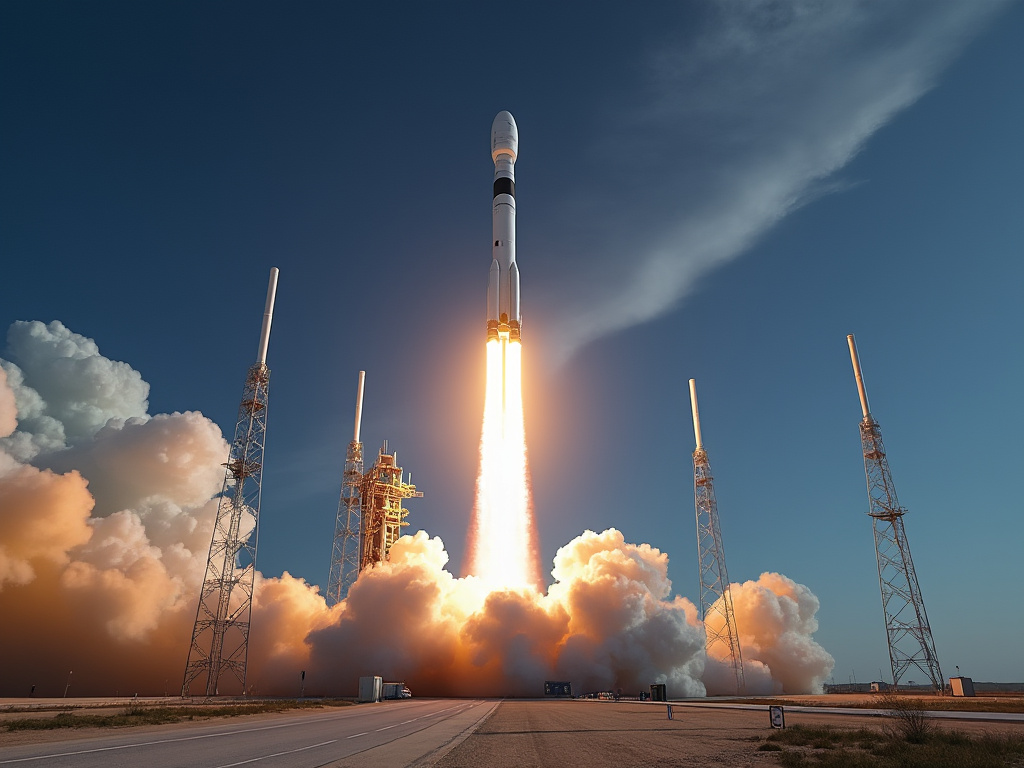
On March 15, 2025, the United Arab Emirates successfully launched its first Synthetic Aperture Radar (SAR) satellite, named Etihad-SAT, aboard a SpaceX Falcon 9 rocket from Vandenberg Space Force Base in California.
This mission marks the UAE's second satellite launch within the first three months of 2025.
The launch occurred at 10:43 AM UAE time, after a brief delay from the originally scheduled 10:39 AM. Following the launch, the SpaceX team confirmed the successful landing of the first stage booster, achieving what is noted as the 400th successful booster landing for the Falcon 9 system.
Etihad-SAT is a 220-kilogram satellite that operates in low Earth orbit at a height of approximately 500 kilometers.
It is designed to capture high-resolution images continuously, regardless of weather conditions.
The satellite's capabilities include monitoring oil spills, managing natural disasters, and assisting in maritime navigation and agricultural management.
Its advanced imaging technology will enable the production of detailed images through radar waves, processed using artificial intelligence to enhance resolution.
The satellite was developed by the Mohammed bin Rashid Space Centre (MBRSC) in partnership with South Korea's Satrec Initiative and represents a significant milestone in the UAE’s commitment to advancing its space technology sector.
The completion announcement for Etihad-SAT was made by Dubai's Crown Prince in February, showcasing the nation's ambitions in space exploration.
Etihad-SAT utilizes three distinct imaging modes:
Spot Mode: Allows for high-resolution imaging of small areas.
Scan Mode: Facilitates wider area coverage for large regions.
Strip Mode: Enables long-range observation along extended areas.
This satellite launch follows the UAE's first SAR satellite, which was launched in August 2024 as part of a broader Earth Observation Programme.
Notably, Etihad-SAT comes just two months after the deployment of MBZ-SAT, an advanced optical imaging satellite.
MBZ-SAT is capable of generating ten times more images and transmitting data at three times the speed compared to its predecessors.
The advancement in satellite technology pertains not only to the UAE's capabilities but also to its ongoing investments in the space sector, which have reportedly reached approximately Dh40 billion.
The UAE's trajectory in space exploration has been marked by several significant achievements, including becoming the first Arab nation to reach Mars with the Hope Probe in 2021, and recently embarking on lunar missions.
Through initiatives like the launch of Etihad-SAT, the UAE demonstrates its ongoing commitment to leveraging space technology for sustainable development and innovation.
This mission marks the UAE's second satellite launch within the first three months of 2025.
The launch occurred at 10:43 AM UAE time, after a brief delay from the originally scheduled 10:39 AM. Following the launch, the SpaceX team confirmed the successful landing of the first stage booster, achieving what is noted as the 400th successful booster landing for the Falcon 9 system.
Etihad-SAT is a 220-kilogram satellite that operates in low Earth orbit at a height of approximately 500 kilometers.
It is designed to capture high-resolution images continuously, regardless of weather conditions.
The satellite's capabilities include monitoring oil spills, managing natural disasters, and assisting in maritime navigation and agricultural management.
Its advanced imaging technology will enable the production of detailed images through radar waves, processed using artificial intelligence to enhance resolution.
The satellite was developed by the Mohammed bin Rashid Space Centre (MBRSC) in partnership with South Korea's Satrec Initiative and represents a significant milestone in the UAE’s commitment to advancing its space technology sector.
The completion announcement for Etihad-SAT was made by Dubai's Crown Prince in February, showcasing the nation's ambitions in space exploration.
Etihad-SAT utilizes three distinct imaging modes:
Spot Mode: Allows for high-resolution imaging of small areas.
Scan Mode: Facilitates wider area coverage for large regions.
Strip Mode: Enables long-range observation along extended areas.
This satellite launch follows the UAE's first SAR satellite, which was launched in August 2024 as part of a broader Earth Observation Programme.
Notably, Etihad-SAT comes just two months after the deployment of MBZ-SAT, an advanced optical imaging satellite.
MBZ-SAT is capable of generating ten times more images and transmitting data at three times the speed compared to its predecessors.
The advancement in satellite technology pertains not only to the UAE's capabilities but also to its ongoing investments in the space sector, which have reportedly reached approximately Dh40 billion.
The UAE's trajectory in space exploration has been marked by several significant achievements, including becoming the first Arab nation to reach Mars with the Hope Probe in 2021, and recently embarking on lunar missions.
Through initiatives like the launch of Etihad-SAT, the UAE demonstrates its ongoing commitment to leveraging space technology for sustainable development and innovation.