The 'Madman Theory' in International Politics
Exploring the tactic of unpredictability and its implementation during the Nixon administration
Niccolò Machiavelli, the renowned political philosopher who passed away in 1527, once suggested that it is wise to imitate madness.
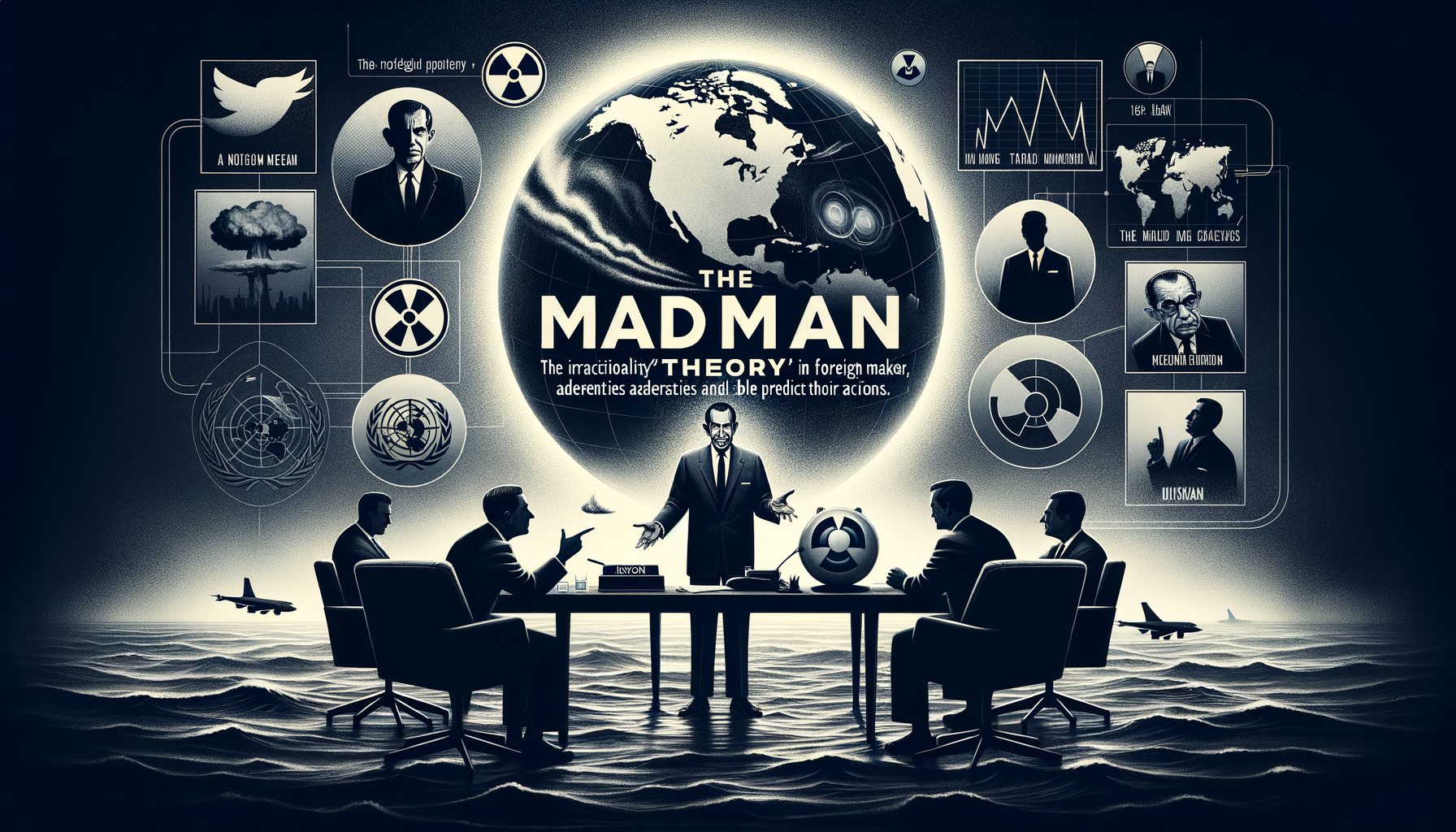
This concept found its way into international politics through what is known as the 'Madman Theory.' This theory posits that a foreign policy maker may benefit from projecting an image of irrationality, compelling adversaries to second-guess their actions due to the unpredictability of such a leader's responses.
The underlying benefit for a decision-maker adopting this guise of madness is the ability to leave adversaries uncertain and unable to predict his actions, as decisions in foreign policy traditionally rely on rationality.
The anticipation is that a policymaker, often an elite figure from any given country, would act in a manner dictated by the national interest.
Understanding this assumption allows an adversary to predict his objectives and subsequently strategize to counter them.
Historically, this theory was closely associated with Richard Nixon, who reportedly adopted the stance of a madman to intimidate his adversaries, particularly the communist powers.
Bob Haldeman, Nixon's Chief of Staff, recounted that Nixon confided in him: “I call it the Madman Theory, Bob.
I want the North Vietnamese to believe that I’ve reached the point where I might do anything to stop the war.
We can’t restrain Nixon when he’s angry—and he has his hand on the nuclear button—and isn’t it worth it to Ho Chi Minh to jump on the peace train?”
Henry Kissinger, the then Secretary of State, employed this strategy by leveraging Nixon’s unpredictability to pressurize the Vietnamese during the negotiations in Paris.
At critical junctures, when talks reached an impasse, Kissinger would pause the discussions and privately take aside the head of the Vietnamese delegation.
He would act as an earnest advisor, warning: “The president is mad.
I am always working to calm him down, but if he hears that you’re stalling negotiations, I might not be able to contain him, and he could do anything.”
According to archives from the U.S. National Archives, Nixon and Kissinger didn’t just rely on rhetoric.
To bolster Washington's negotiating position during talks with the Vietnamese, Nixon ordered a global nuclear alert.
The intention was to send an unmistakable signal to Hanoi and its supporters in Moscow that patience had worn thin.
It was a clear push for Moscow to prompt the Vietnamese to show more flexibility in negotiations.
The United States went as far as deploying fleets and orchestrating military movements across various global regions.
These operations included strategic bomber movements, aircraft carriers, and submarines armed with ballistic missiles.
Kissinger followed up these actions with a stark warning to the Vietnamese via intermediaries, suggesting that Nixon would regrettably resort to excessive force if the war didn’t end by November 1, 1969.
Despite these efforts, Nixon found himself unable to carry out his threats due to the intensifying protests against the war, where escalation risked igniting public fury and opposition.
Ultimately, the 'Madman Theory' did not yield the desired results for Nixon; the Vietnamese continued their fight for several years until Saigon, the capital of South Vietnam, fell to revolutionary forces.
The question arises: why did the 'Madman Theory' not work on the Vietnamese?
Primarily, they did not believe in the president’s purported irrationality, given the balance of terror between the Soviets and the Americans.
Using nuclear weapons in the face of mounting public opposition would have inevitably led to Nixon and his administration's downfall.
Additionally, the prospect of using nuclear force against a non-nuclear state would have transformed the international landscape, potentially prompting nuclear countries to use forbidden weapons on their enemies, as seen a decade later with the Soviet Union in Afghanistan.
Some leaders may emulate this theory as a ploy to achieve their goals.
However, it is crucial not to fall into their trap, as the adage goes, 'A word to the wise is sufficient.'
This concept found its way into international politics through what is known as the 'Madman Theory.' This theory posits that a foreign policy maker may benefit from projecting an image of irrationality, compelling adversaries to second-guess their actions due to the unpredictability of such a leader's responses.
The underlying benefit for a decision-maker adopting this guise of madness is the ability to leave adversaries uncertain and unable to predict his actions, as decisions in foreign policy traditionally rely on rationality.
The anticipation is that a policymaker, often an elite figure from any given country, would act in a manner dictated by the national interest.
Understanding this assumption allows an adversary to predict his objectives and subsequently strategize to counter them.
Historically, this theory was closely associated with Richard Nixon, who reportedly adopted the stance of a madman to intimidate his adversaries, particularly the communist powers.
Bob Haldeman, Nixon's Chief of Staff, recounted that Nixon confided in him: “I call it the Madman Theory, Bob.
I want the North Vietnamese to believe that I’ve reached the point where I might do anything to stop the war.
We can’t restrain Nixon when he’s angry—and he has his hand on the nuclear button—and isn’t it worth it to Ho Chi Minh to jump on the peace train?”
Henry Kissinger, the then Secretary of State, employed this strategy by leveraging Nixon’s unpredictability to pressurize the Vietnamese during the negotiations in Paris.
At critical junctures, when talks reached an impasse, Kissinger would pause the discussions and privately take aside the head of the Vietnamese delegation.
He would act as an earnest advisor, warning: “The president is mad.
I am always working to calm him down, but if he hears that you’re stalling negotiations, I might not be able to contain him, and he could do anything.”
According to archives from the U.S. National Archives, Nixon and Kissinger didn’t just rely on rhetoric.
To bolster Washington's negotiating position during talks with the Vietnamese, Nixon ordered a global nuclear alert.
The intention was to send an unmistakable signal to Hanoi and its supporters in Moscow that patience had worn thin.
It was a clear push for Moscow to prompt the Vietnamese to show more flexibility in negotiations.
The United States went as far as deploying fleets and orchestrating military movements across various global regions.
These operations included strategic bomber movements, aircraft carriers, and submarines armed with ballistic missiles.
Kissinger followed up these actions with a stark warning to the Vietnamese via intermediaries, suggesting that Nixon would regrettably resort to excessive force if the war didn’t end by November 1, 1969.
Despite these efforts, Nixon found himself unable to carry out his threats due to the intensifying protests against the war, where escalation risked igniting public fury and opposition.
Ultimately, the 'Madman Theory' did not yield the desired results for Nixon; the Vietnamese continued their fight for several years until Saigon, the capital of South Vietnam, fell to revolutionary forces.
The question arises: why did the 'Madman Theory' not work on the Vietnamese?
Primarily, they did not believe in the president’s purported irrationality, given the balance of terror between the Soviets and the Americans.
Using nuclear weapons in the face of mounting public opposition would have inevitably led to Nixon and his administration's downfall.
Additionally, the prospect of using nuclear force against a non-nuclear state would have transformed the international landscape, potentially prompting nuclear countries to use forbidden weapons on their enemies, as seen a decade later with the Soviet Union in Afghanistan.
Some leaders may emulate this theory as a ploy to achieve their goals.
However, it is crucial not to fall into their trap, as the adage goes, 'A word to the wise is sufficient.'